Keeping Fresh Herbs Alive Long Enough to Use
A no-fuss approach to washing, storing and using fresh herbs before they become fridge compost.
Fresh herbs are not a long-term commitment
A bunch of parsley or coriander often looks wildly optimistic in the shopping bag: all those leaves, and no immediate plan beyond putting some on dinner. Then it goes into the fridge in its flimsy packet, disappears behind the milk, and emerges four days later with the general spirit of pond weed.
The useful thing is not making herbs last for weeks. Most will not, particularly in a small fridge that is opened all day. The aim is simply to keep them bright, usable and visible for five to seven days, long enough to scatter them through a few meals rather than feeling obliged to make one enormous, herb-heavy supper.
- Buy herbs that smell fresh and look perky, with no slimy stems or dark, wet patches.
- Use the most delicate bunches first: coriander, basil, dill and chives tend to fade before parsley, mint or rosemary.
- Make a loose plan when you unpack them. One bunch can go into a salad, soup, omelette and something for the freezer without becoming a project.
Start by sorting, not washing
As soon as you get home, remove any elastic band, cardboard collar or tight plastic sleeve. Those bands bruise stems and trap dampness in the middle of the bunch, which is where the unpleasant bits usually begin.
Pick out yellow leaves and trim a few millimetres from the base of the stems. If the herbs are visibly gritty, give them a wash straight away. Otherwise, I usually wait until I am ready to cook. Washing at the last minute is the simplest route, because stored water is more troublesome than stored soil.
If you do wash herbs before storing them, use a bowl of cold water rather than holding them under a hard-running tap. Swish gently, lift the leaves out so the grit stays behind, then dry them very thoroughly. A salad spinner is handy, but a clean tea towel and a little patience do the job. Damp leaves are what turn a promising bunch of dill into a sad green clump.
- Do not soak woody herbs such as rosemary, thyme or sage for long; a quick rinse is enough.
- For sandy coriander or parsley, change the water and wash again if needed.
- Dry leaves before chopping. Wet herbs do not chop neatly and tend to stick to the knife.
Treat soft herbs like flowers
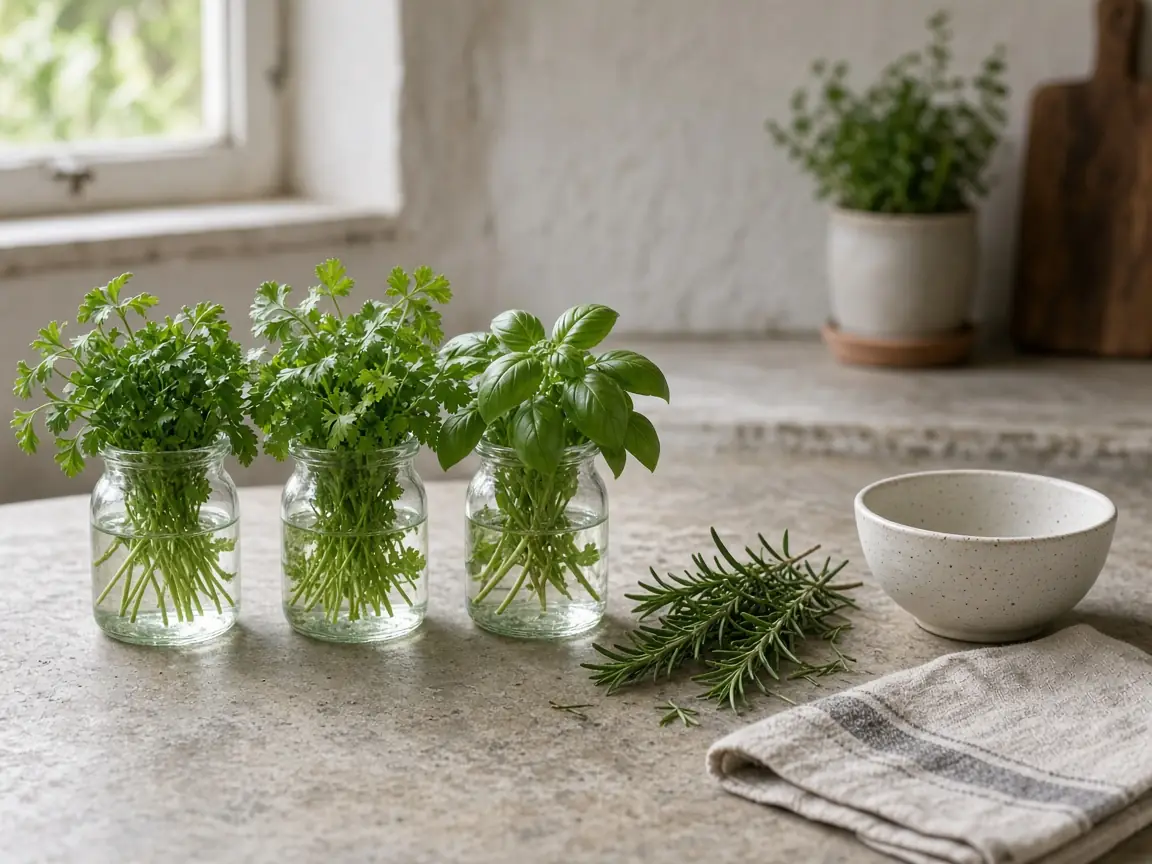
Parsley, coriander, mint and dill do well as a little bunch in a glass or jar with 2 to 3 cm of cold water in the bottom. Keep the leaves loose, cover them lightly with an upturned reusable bag or a roomy food bag, and put them in the fridge. The cover helps stop the leaves drying out without sealing in too much condensation.
Change the water every day or two, especially if it looks cloudy. It sounds faintly fussy, but takes less time than scraping wilted leaves into the bin. Chives are the exception in my kitchen: I wrap them in a barely damp paper towel and keep them in a lidded container or bag in the fridge, since their narrow stems bend rather than stand up politely.
Basil prefers room temperature. Put its stems in a glass of water on the worktop, away from direct sun and fruit bowls. Do not refrigerate it unless your kitchen is very hot; cold air blackens its leaves with surprising speed. Basil also likes a quick check each day, because it has a flair for looking excellent until it suddenly does not.
- Keep herb jars away from the coldest back wall of the fridge.
- Use a clean jar and fresh water; old vase water is not a model to follow.
- If leaves are bruised but still smell good, use them in cooked food rather than a delicate salad.
Woody herbs need less ceremony
Rosemary, thyme, sage and oregano are tougher. Wrap them loosely in dry or barely damp kitchen paper, then place them in a container or unsealed bag in the fridge. They do not need standing water, and their firmer leaves are less prone to immediate collapse.
Check the paper after a couple of days. If it is soaked, replace it. If the herbs feel dry and brittle, lightly dampen a new piece of paper. The goal is cool air with just enough humidity, not a miniature swamp.
These herbs are also easy to use in small amounts. A sprig can go into the pot when making White Bean and Rosemary Soup, or be tucked under vegetables and chicken on a tray. Taking a little as you cook is how a bunch gets used, rather than waiting for one grand rosemary occasion.
- Strip thyme leaves by holding the top of the stem and pulling downward against the grain.
- Keep rosemary stems whole until needed; chopped rosemary loses its freshness sooner.
- Discard mouldy sprigs promptly so they do not spread the trouble through the packet.
Give tired herbs a useful last job
Before herbs become properly slimy or mouldy, they are often still perfectly good for cooking. Soft parsley can be stirred through Everyday Tomato Sauce. Fading coriander is welcome in a spicy bowl or alongside Weeknight Bean Tacos. Mint that is no longer handsome enough for the table can be chopped into yogurt, tea, or a quick dressing with lemon and olive oil.
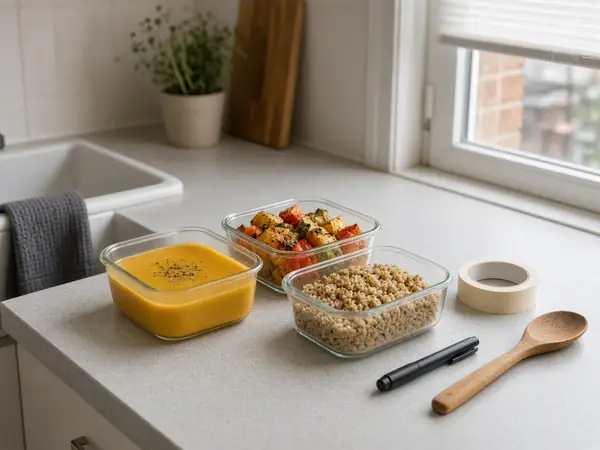
When there is more than you can reasonably use, make a rough freezer stash. Chop the leaves, pack them into an ice-cube tray, cover with water or olive oil, and freeze. The cubes are best for soups, sauces and stews rather than garnish, but that is not a failure. It is dinner on a tired evening.
Tender stems are useful too. Parsley and coriander stems have plenty of flavour; chop them finely and cook them with onions, garlic or spices. Dill stems can flavour a pot of potatoes. Save the truly woody ends for vegetable stock if you are collecting scraps, though not if they have gone sticky.
- Freeze herbs in small portions, since a large frozen block is inconvenient and rather discouraging.
- Label cubes if you freeze more than one kind; parsley and coriander are less distinguishable at a frosty glance.
- Do not try to rescue herbs that smell sour, feel slimy, or show mould.
Keep them where you can see them
The most reliable storage trick is embarrassingly basic: put herbs at the front of the fridge. A jar of parsley in the door or a labelled tub at eye level has a far better chance than a packet hidden in the vegetable drawer beneath three onions and an old lemon.
I try to use one herb in the first meal after shopping, then leave the rest somewhere obvious. A handful of parsley in scrambled eggs, dill over potatoes, mint in a cucumber salad, or coriander over a bowl of soup makes the bunch feel less like a special-occasion ingredient. Fresh herbs are not magic, but they can make ordinary food taste as if someone had paid attention.